Building and Teaching: A 24-Hour Hackathon and a Classroom Full of Coders
This post is about two of those experiences: building a hardware prototype in 24 hours at a hackathon, and standing in front of more than 50 students to teach programming fundamentals.
Building and Teaching: A 24-Hour Hackathon and a Classroom Full of Coders
Some of my favourite memories in tech are not about the final result. They are about the late nights, the bugs that refuse to go away, and the moment something finally works. This post is about two of those experiences: building a hardware prototype in 24 hours at a hackathon, and standing in front of more than 50 students to teach programming fundamentals.
Part 1: The KU Hardware Hackathon
Aavishkar '23 at Kathmandu University
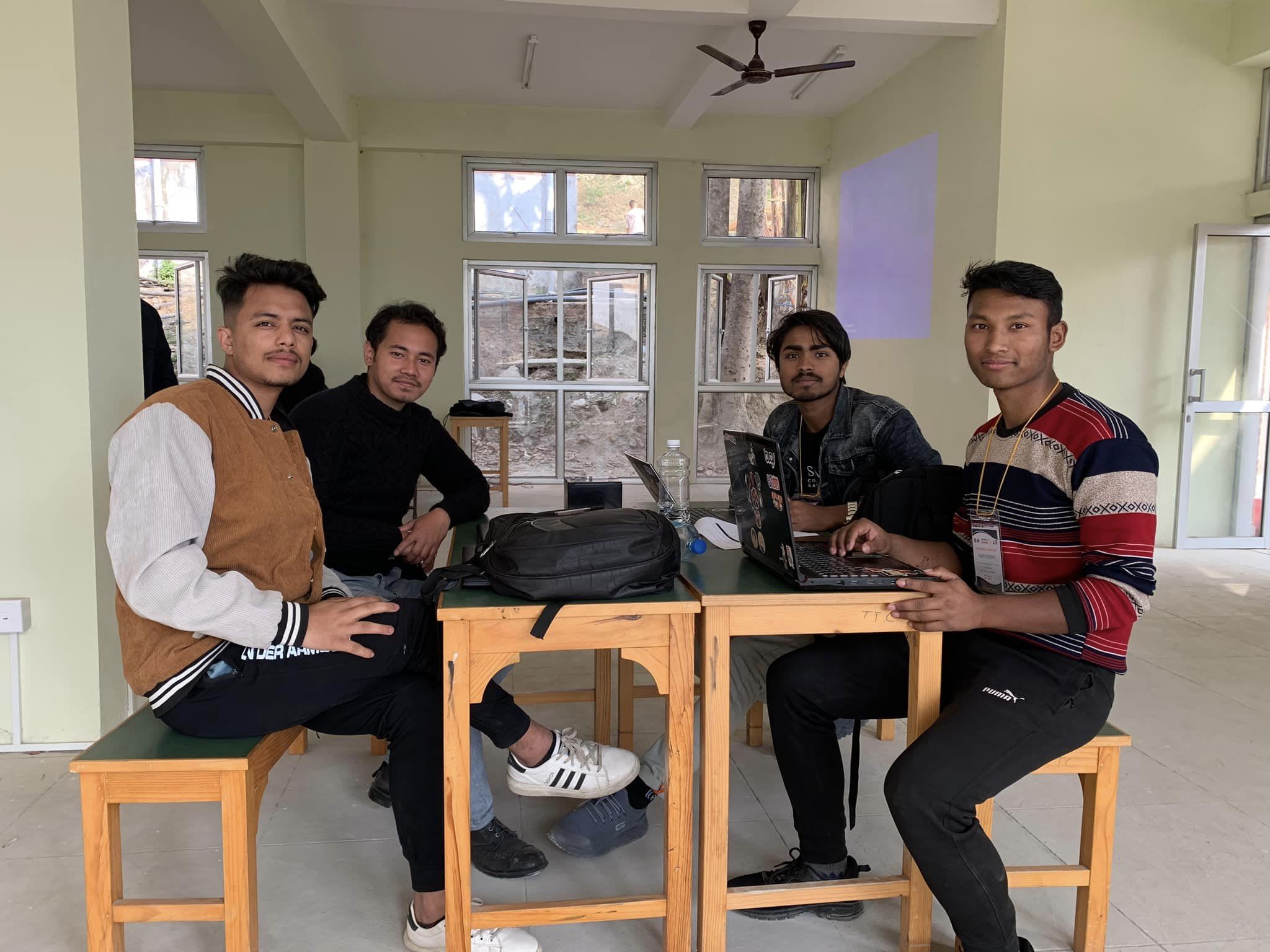
On 2 and 3 March 2023, I took part in Aavishkar '23, a hardware hackathon organized by YarsaTech and held at Kathmandu University. The rules were simple and scary: build a working hardware prototype in just 24 hours.
There were four of us in the team, and the theme was home-based innovation.
Starting with a blank page
Before touching a single wire, we sat down and brainstormed. What problem inside a home is worth solving in 24 hours? We kept coming back to one thing: fire. A kitchen fire or a short circuit can turn dangerous in minutes, especially if nobody is home or everyone is asleep.
So we decided to build a smart system that detects smoke and fire, warns everyone, and helps people get out.
What we built
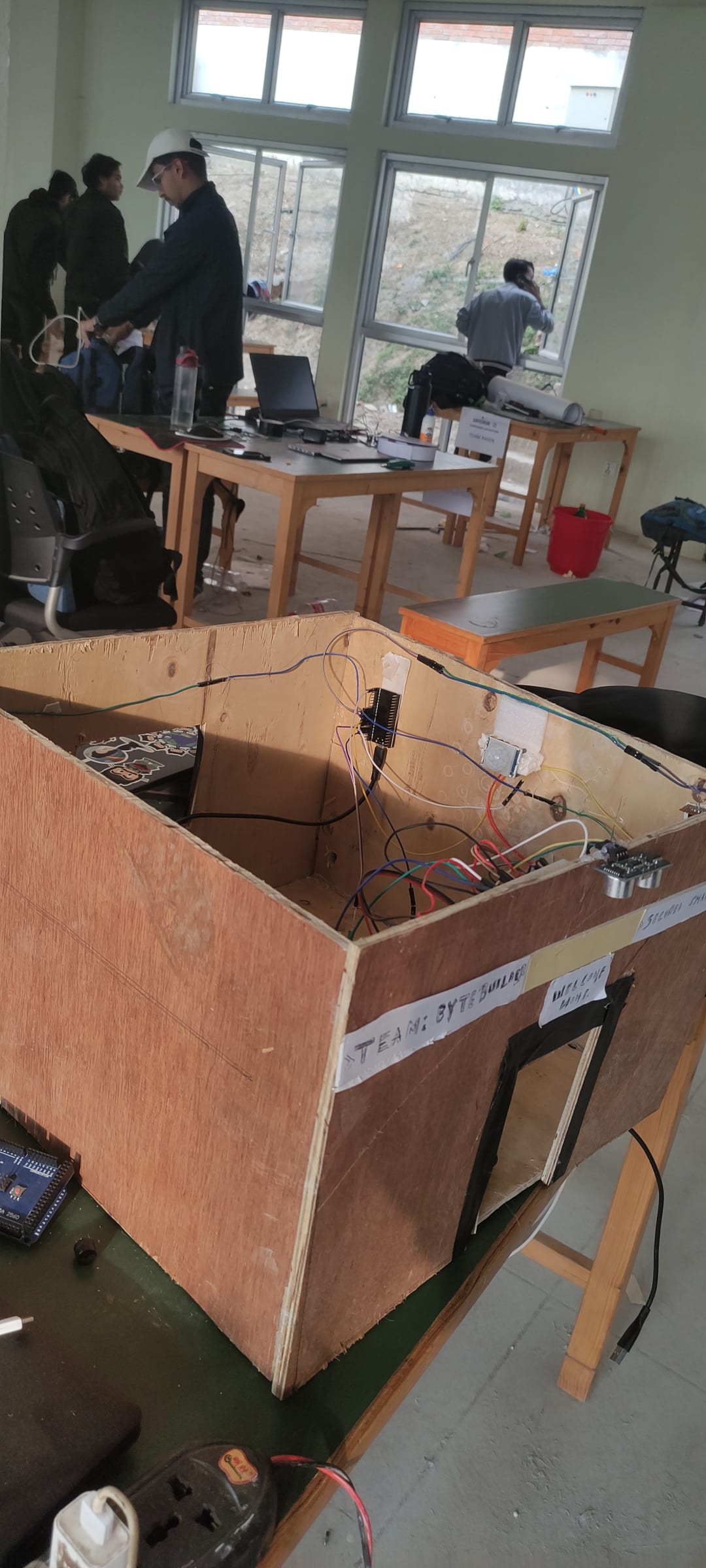
Our project was a smoke and fire detection system for the home, with app integration so the owner could manage and monitor it. Here is how it worked:
- An Arduino with a smoke sensor keeps watch over the house.
- The moment smoke is detected, an alarm bell rings to warn everyone inside.
- At the same time, the door unlocks automatically, so people are not trapped while trying to escape.
- The app notifies the user, so even if they are away, they know something is wrong at home.
We programmed everything in C++, and to make the demo feel real, we built a small model of a house and fitted the system inside it.
24 hours, no sleep
Honestly, the hardest part was not the code. It was making the hardware and software work together, while our bodies were begging us to sleep. A sensor reading looks fine on its own, but getting it to trigger the bell, unlock the door and send a notification to the app, all in the right order, took a lot of testing.
We were exhausted, but we kept our composure. Everyone gave their input: planning, wiring, programming, building the house model, and testing again and again until the prototype finally worked.
Demo time
By the time we presented, we had the best version of our project ready, and we showed the best version of ourselves too. The judges liked our work, and we were genuinely open to their feedback. Later that week, we went back and worked on the improvements they suggested.
We did not win, but I would not trade that experience for anything. Beating sleep, testing our limits, and building something real with my team in a single day taught me more than many weeks of normal study.
Winning is great, but sometimes the real prize is finding out what you are capable of under pressure.
A small plot twist
Because of the exhaustion, I left my phone on the bus on the way back. For a few panicked hours, I thought it was gone for good. Fortunately, I got it back, and it became the funniest part of the story afterwards.
Part 2: Teaching the Programming Fundamentals Workshop
From building to teaching
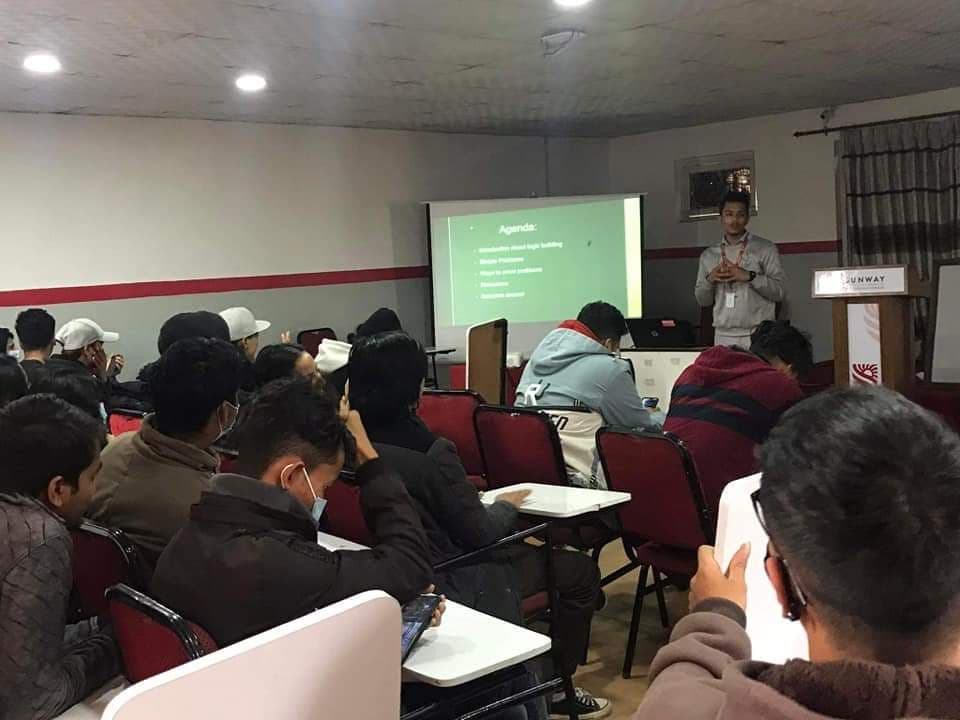
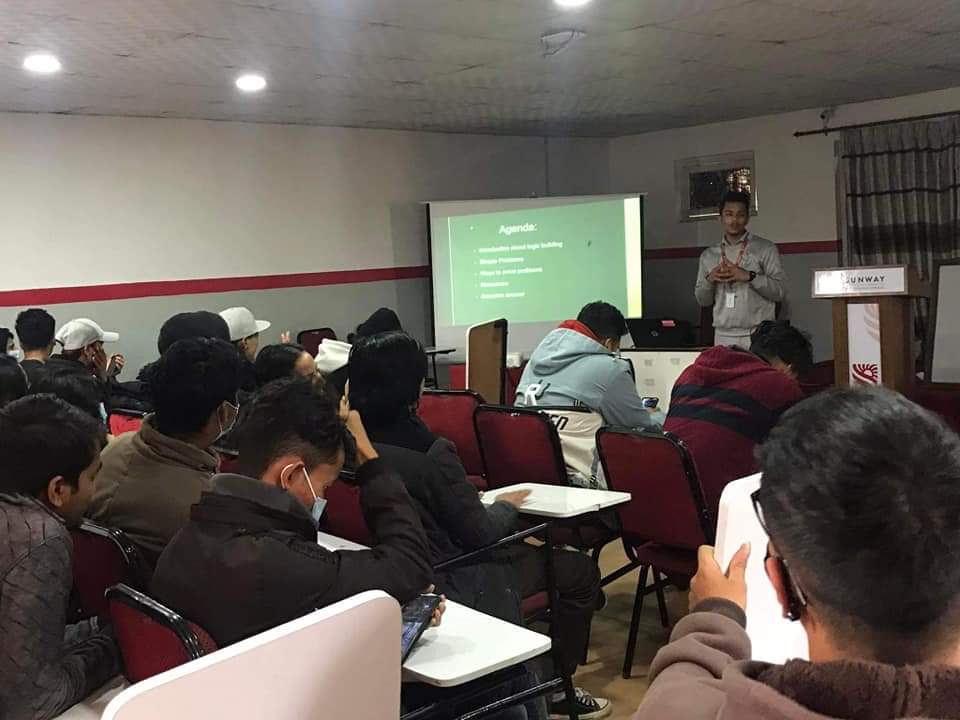
In 2024, I got a very different kind of challenge. The IT Club at Sunway Business College organized a programming fundamentals workshop, and I was one of the people teaching it. More than 50 students joined.
The goal was to help fellow students build their logic and problem-solving skills, the foundation that every programmer needs before learning any specific language.
What we covered
- Loops, and how to make a computer repeat work for us
- Conditions, and how programs make decisions
- Flowcharts, to plan the logic before writing any code
- Problem-solving exercises, to put it all into practice
Making it fun
Nobody learns well by staring at slides for hours, so we mixed things up. We used slides to explain each idea, and then ran an interactive game to test it. The game got everyone involved, and it was the moment the room really came alive. Students who were quiet at the start were shouting out answers by the end.
What teaching taught me
I went in thinking I was there to teach, but I ended up learning a lot too. Explaining a loop or a condition in simple words forces you to understand it deeply yourself. Every question from a student made me think about the topic from a new angle.
It was a great feeling to help others take their first steps in programming, the same steps I once struggled with.
Looking Back
The hackathon and the workshop could not be more different. One was 24 hours of wires, sensors and C++ with three teammates. The other was a classroom of 50+ students learning to think like programmers.
But both taught me the same lesson: you grow the most when you push yourself, whether that means staying awake to make a prototype work, or standing up in front of a room to share what you know.
I am grateful to my teammates, to YarsaTech and Kathmandu University for the hackathon, to the IT Club at Sunway Business College for the workshop, and to every student who showed up curious. I am looking forward to the next challenge.